

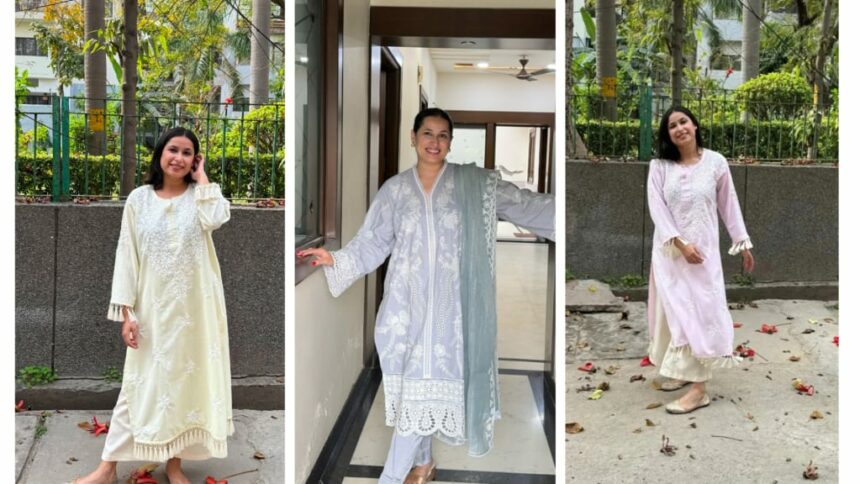
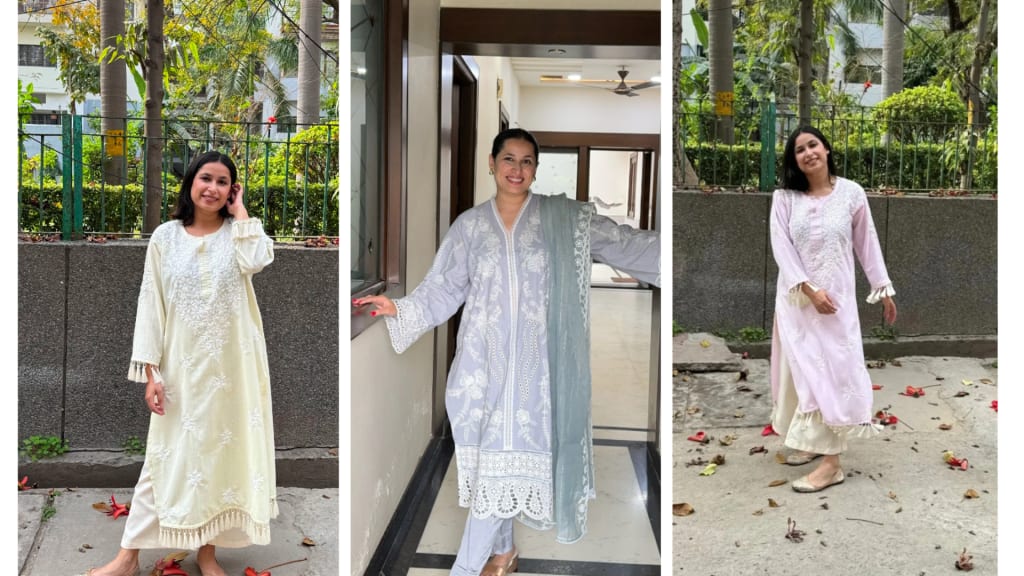
Before diving into trends, it helps to understand the name. “Farshi” comes from the Persian word farsh, meaning “floor”—a fitting description for a silhouette that doesn’t just reach the ground, but gracefully trails across it. The Farshi Salwar is known for its wide, flowing cut and dramatic length, creating a regal presence with every step.
A Legacy Rooted in Royalty
The Farshi Salwar dates back to the opulence of Mughal-era courts in the 17th and 18th centuries, especially in cultural hubs like Lucknow and Hyderabad. Worn by noblewomen and aristocrats, it was far more than clothing—it was a symbol of status and refinement.
Crafted from luxurious fabrics like silk, velvet, jamawar, and brocade, these garments often featured intricate zardozi, gota-patti, and gold thread embroidery. With fabric lengths sometimes stretching up to ten metres, the Farshi was designed to impress.
Wearing one wasn’t just about style—it signaled elegance, wealth, and cultural sophistication.
A Blend of Influences
Some historians suggest that the Farshi Salwar may have been influenced by British-era fashion. The sweeping gowns worn by European women during colonial times likely inspired South Asian nobility to reinterpret the concept through their own textile traditions.
The result? A unique fusion—Western volume meets Eastern craftsmanship.
Preserved Through Cinema
Classic films like Umrao Jaan and Shatranj Ke Khilari helped immortalize the Farshi Salwar on screen. Often worn by courtesans and aristocratic women, it became synonymous with grace, poise, and Nawabi charm.
These cinematic portrayals ensured that even as trends changed, the Farshi remained culturally relevant.
From Decline to Revival
Post-independence, the Farshi Salwar slowly faded from everyday fashion. It became reserved for weddings, heirlooms, and special occasions, while trends shifted toward churidaars and palazzos.
For years, it lived quietly in wardrobes—more nostalgic than fashionable.
Pakistan’s Role in the Comeback
While it lost momentum in India, Pakistan kept the silhouette alive through television dramas and fashion circles. The real turning point came around 2023, when stylists and designers began reintroducing it in modern contexts.
This sparked renewed interest across South Asia—and beyond.
Designers Reimagine the Classic
Contemporary designers have played a huge role in making the Farshi wearable again. By using lighter fabrics like chiffon, organza, and tussar, and toning down heavy embellishments, they’ve adapted it for today’s lifestyle.
Indian designers soon followed suit, offering fresh interpretations that balance tradition with practicality—making the Farshi suitable not just for weddings, but festive gatherings and even semi-formal occasions.
The Social Media Effect
The Farshi Salwar’s dramatic silhouette makes it perfect for visual platforms like Instagram and Pinterest. Its flowing hemline, regal structure, and photogenic appeal helped it go viral among fashion creators.
At the same time, the rise of slow fashion—where craftsmanship and heritage matter more than fast trends—has further fueled its comeback.
Why It’s Trending in the UAE
Across the UAE, from Dubai’s lavish weddings to Abu Dhabi’s elegant celebrations, the Farshi Salwar is gaining popularity once again.
Its grandeur fits perfectly with the region’s love for statement fashion, while modern, lightweight versions make it practical even in warmer weather. It offers the best of both worlds: tradition and comfort.
Celebrity Influence
Fashion revivals often need star power—and the Farshi Salwar has found strong supporters.
- Alia Bhatt has helped bring heritage styles to a younger audience
- Kareena Kapoor Khan continues to champion bold, traditional silhouettes
- Khushi Kapoor adds a fresh, Gen Z twist to classic fashion
- Sonam Bajwa has been a consistent advocate for dramatic ethnic styles
Their influence has helped transform the Farshi from a vintage piece into a modern fashion statement.
Different Styles of Farshi Salwar
The Farshi isn’t a single look—it adapts beautifully depending on styling:
- Pastel & Festive: Light tones with delicate embroidery, perfect for daytime events
- Velvet & Rich: Heavy fabrics for evening glamour
- Anarkali Pairing: Creates a flowing, layered silhouette
- Modern Minimal: Clean cuts with subtle detailing for contemporary wear
- Printed Styles: Casual, playful versions for lighter occasions
- Brocade & Mughal: Traditional, heritage-rich designs closest to the original
A Timeless Comeback
The Farshi Salwar’s return isn’t just about fashion—it’s about rediscovering heritage. It blends history, craftsmanship, and modern design into a single silhouette that feels both nostalgic and new.
In a world chasing fast trends, the Farshi stands out by doing the opposite—slowing things down, embracing detail, and making every step feel intentional.
From royal courts to UAE celebrations, its journey proves one thing: true elegance never really disappears—it just waits for the right moment to return.