

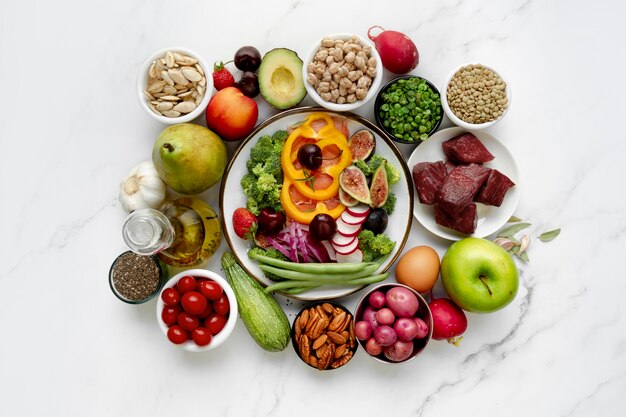
One of the most well-liked diets on the planet is the ketogenic and low-carbohydrate diets. Keto diets are known for weight loss and are associated with a number of cardiometabolic benefits and neurological benefits [1,2]. To induce a state of ketosis, in which the body primarily uses dietary fat and its own stored fat for fuel, this diet includes a lot of healthy fats, moderate protein, and very little carbohydrates. When following a ketogenic diet, the macros typically consist of 70% fat, 20-25% protein, and 5-10% carbohydrates. Keeping net carbs low while focusing on whole, minimally processed, nutrient-dense foods is the keto diet’s best approach. Common foods that are typically included in a clean keto diet include:

Healthy fats: Avocados, nuts, seeds, coconut oil, olive oil, and grass-fed butter.
High-quality proteins: Beef, pork, fish, poultry, eggs, and even organ meat.
Leafy greens, broccoli, cauliflower, asparagus, and bell peppers are examples of non-starchy vegetables. Low-sugar fruits: Berries such as strawberries and raspberries in moderation.
Dairy products with full fat and no added sugar include butter, high-quality cheeses with minimal processing, yogurt, and cream. Stevia, erythritol, and monk fruit are natural sweeteners to use in moderation. Coffee, herbal teas, and water are all healthy beverages. packaged foods that are good for the keto diet and made with good ingredients and good fats. By eating whole, nutrient-dense foods, individuals can get the full array of essential amino acids, vitamins, minerals, and antioxidants while maintaining ketosis.
Dirty Keto
On the opposite end of the keto spectrum is “dirty keto.” In contrast to the ideal ketogenic diet, those who follow the dirty keto diet will consume unhealthy fats and foods that are highly processed and of low quality as long as they adhere to the prescribed macronutrient ratios. Despite eating the correct macronutrients, dirty keto can have negative effects on overall health because it doesn’t care about the quality or nutritional value of the food it consumes. Although dirty keto can put someone into ketosis and help them lose weight, it can also put them at risk for heart disease, Alzheimer’s, and cancer in the long run [3,4,5] because it allows harmful additives, preservatives, and artificial ingredients. On a dirty keto diet, some common foods include: Fried chicken, burgers without buns, and other high-fat options typically prepared in vegetable or seed oils are examples of fast food. Lunch that has been highly processed or meat that has been packaged with sugar or other bad additives. Artificially sweetened foods and beverages.
Low carb dressings and sauces made with unhealthy oils.
Pre-packaged low-carb foods meant to mimic full-carb foods, like “keto” bagels, chips, brownies, and meals made with low-quality ingredients, preservatives, and additives.
Even though these foods may assist individuals in meeting their macronutrient requirements for a dirty keto diet, they frequently lack the necessary nutrients that are found in whole, unprocessed foods. Because their nutritional value is typically lower per calorie, it may require eating more food to feel full. People who eat dirty keto are also more likely to stall in their weight loss goals and give up on keto altogether.