
Pregnancy is one of the most important phases for your body—and your baby’s future health. The food you eat plays a direct role in your baby’s brain development, bone strength, immunity, and overall growth. The good news? You don’t need exotic foods or complicated diets—your everyday Indian kitchen has everything you need.
Let’s break it down trimester by trimester so you know exactly what your body needs at each stage.
First Trimester (Weeks 1–13): Laying the Foundation
This is when your baby’s brain, spinal cord, and neural tube begin forming. The most crucial nutrient during this phase is folic acid.
Key Nutrients & Indian Sources
- Folic Acid: Palak, moong dal, asparagus, fortified cereals
- Iron: Dates (khajoor), palak, pomegranate, ragi, jaggery (gur)
- Vitamin B12: Eggs, दूध, curd
- Ginger (Adrak): Helps reduce nausea
Managing Morning Sickness
- Eat small meals every 2–3 hours
- Keep biscuits or murmura near your bed for early nausea
- Sip ginger tea (light, less milk)
- Cold or room-temperature foods may feel easier to eat
What to Avoid
- Raw papaya and pineapple
- Undercooked eggs, meat, or fish
- Unpasteurized dairy products
- Too much caffeine (limit to 1 cup/day)
- Alcohol (strictly avoid)
Second Trimester (Weeks 14–27): Growth & Strength
This is the phase of rapid development—bones, muscles, and organs are forming. You’ll need slightly more calories (around 300–350 extra per day), along with a focus on calcium and protein.
Key Nutrients & Sources
- Calcium: Milk, curd, ragi, sesame seeds (til)
- Protein: Dal, paneer, eggs, chicken (if non-veg)
- Omega-3 (DHA): Walnuts, flaxseeds, fatty fish
- Vitamin D: Sunlight, egg yolks, fortified milk
Sample Daily Meal Plan
- Early Morning: Soaked almonds + walnuts + milk
- Breakfast: Moong dal chilla + curd + fruit
- Mid-Morning: Seasonal fruit + nuts
- Lunch: Roti + dal + sabzi + curd + salad
- Evening: Chaas + dhokla or boiled egg
- Dinner: Rice + dal + sabzi + warm milk before bed
Third Trimester (Weeks 28–40): Final Growth & Preparation
In this stage, your baby gains most of its weight. Your body needs more iron, and you may experience issues like heartburn or constipation.
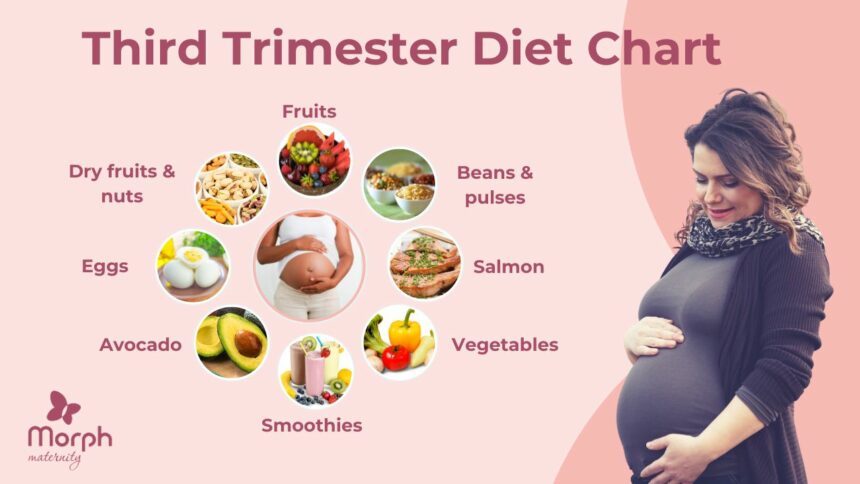
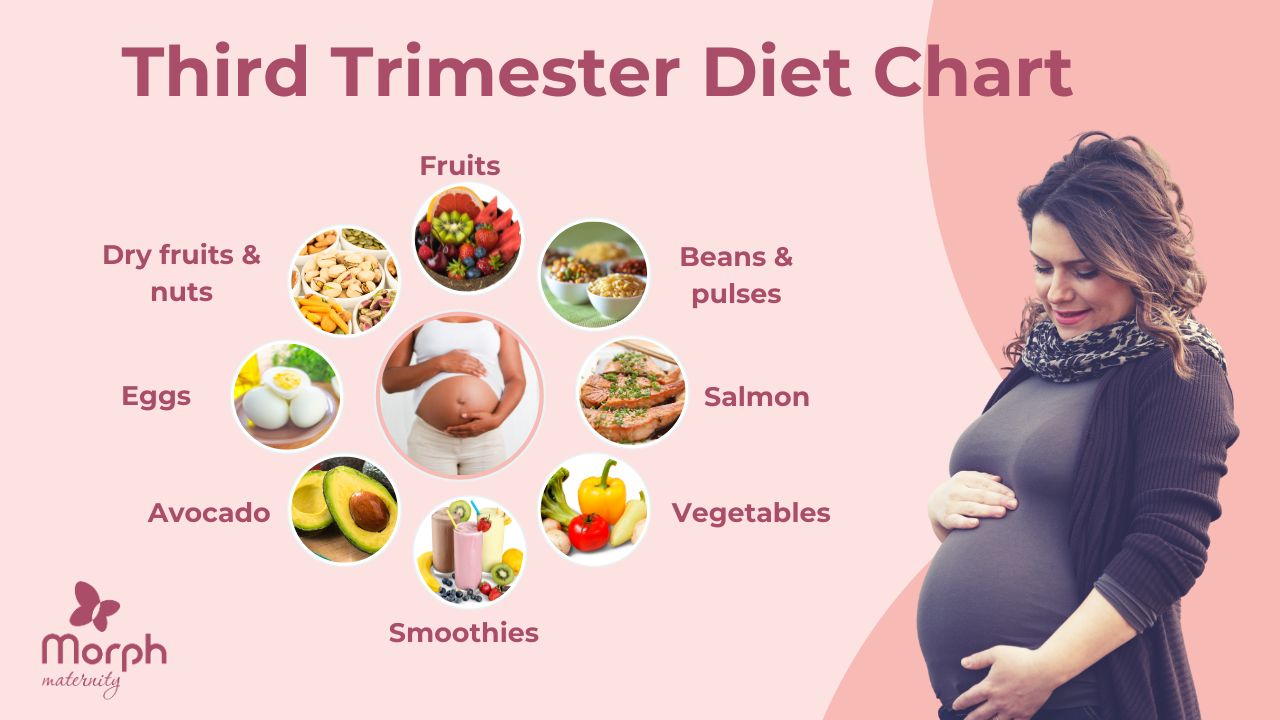
Key Nutrients & Sources
- Iron: Ragi, dates, palak (pair with Vitamin C)
- Fibre: Papaya, prunes, whole grains, isabgol
- Vitamin C: Amla, guava, lemon (helps absorb iron)
- Magnesium: Bananas, nuts, dark chocolate
Managing Common Issues
- Heartburn: Eat smaller meals, avoid spicy food, don’t lie down after eating
- Constipation: Drink more water (2.5–3 litres), eat fibre-rich foods
- Leg Cramps: Ensure enough calcium and magnesium
- Swelling: Reduce salty snacks, increase potassium-rich foods like bananas
The Golden Rule of Pregnancy Nutrition
Don’t “eat for two”—eat better for two.
From the second trimester onwards, you only need about 300 extra calories a day—that’s just an extra bowl of dal or a couple of rotis. Focus on quality over quantity.
And one more thing—never skip breakfast. It helps maintain stable energy and blood sugar levels throughout the day.
Final Thoughts
A healthy pregnancy diet isn’t about strict rules—it’s about balance, consistency, and smart choices. Stick to wholesome, home-cooked meals, listen to your body, and nourish yourself with care. Because every healthy bite you take is a step toward your baby’s healthy future.