

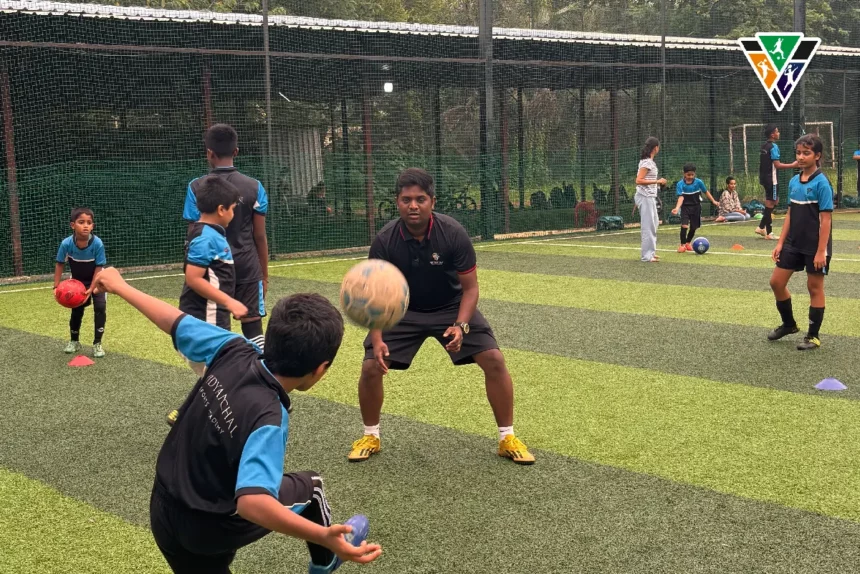

Getting children involved in sports at an early age can provide benefits that extend far beyond physical fitness. Regular participation in sports can help children develop coordination, confidence, discipline, teamwork, communication skills, and healthy habits that can continue into adulthood.
For parents looking for a structured environment where children can learn and enjoy sports, programs such as Gamepoint can provide opportunities to introduce young players to training in a supportive setting. The goal of early sports training should not be focused entirely on competition or winning. Instead, children should have the opportunity to develop skills while having fun and discovering activities they genuinely enjoy.
Why Should Children Start Playing Sports Early?
Childhood is an important period for developing fundamental movement skills. Running, jumping, balancing, throwing, catching, and changing direction are basic abilities that can support participation in many different sports.
Early exposure gives children opportunities to practice these movements regularly. Over time, they can become more comfortable with physical activity and develop greater confidence in their abilities.
Starting early also helps children understand that exercise can be enjoyable rather than simply something they have to do.
Physical Benefits of Sports Training
One of the most obvious advantages of children’s sports participation is improved physical fitness.
Regular activity can help children develop:
- Strength and endurance
- Balance and coordination
- Flexibility
- Agility
- Motor skills
- Cardiovascular fitness
Sports can also encourage children to remain active instead of spending most of their free time sitting in front of screens.
Developing an active lifestyle during childhood can help establish habits that may continue throughout adolescence and adulthood.
Developing Coordination and Motor Skills
Sports require children to control their bodies in different ways. A child playing tennis, for example, needs to coordinate their eyes, hands, feet, and body position.
Similarly, team sports require players to run, stop, change direction, pass, catch, and react quickly.
Structured training can help children gradually develop these skills. Coaches can break movements into manageable steps and allow children to practice them repeatedly.
Building Confidence
Learning a new sport can initially be challenging. Children may miss a shot, lose a game, or struggle with a particular skill.
With appropriate encouragement, these experiences can teach children that improvement takes time.
When a child eventually masters a skill they previously found difficult, they experience a sense of achievement. These small successes can contribute to greater self-confidence.
A positive coaching environment is particularly important. Children should feel comfortable making mistakes and asking questions while learning.
Learning Teamwork and Communication
Team sports provide valuable opportunities to learn how to work with others.
Children need to communicate with teammates, listen to coaches, understand their roles, and cooperate toward a common objective.
They also learn that individual success is not always the most important outcome. Supporting teammates and contributing to the group can be equally valuable.
These communication and teamwork skills can be useful at school, in friendships, and eventually in professional environments.
Developing Discipline and Responsibility
Sports training often involves regular practice, following instructions, preparing equipment, and arriving on time.
These routines can help children develop discipline and responsibility.
They learn that improvement generally comes from consistent effort rather than immediate results. This lesson can apply to many areas of life, including education and personal development.
Learning How to Handle Success and Failure
Competition naturally includes both winning and losing. Learning to deal with both experiences can be an important part of growing up.
Children can learn to celebrate achievements without becoming overly focused on winning. At the same time, losing can teach resilience and provide an opportunity to identify areas for improvement.
Parents and coaches can help by emphasizing effort, progress, sportsmanship, and learning rather than placing excessive pressure on results.
The Importance of a Supportive Training Environment
A child’s first experiences with organized sports can influence their long-term attitude toward physical activity.
A supportive training environment should be age-appropriate, encouraging, and focused on skill development.
Programs at facilities such as Gamepoint can potentially give children access to structured sessions where coaches can introduce techniques progressively.
The environment should make children feel that sports are something they can enjoy and explore rather than another source of academic or performance pressure.
Helping Children Discover Their Interests
Not every child enjoys the same sport.
Some children may enjoy individual activities, while others prefer team-based games. Some may love competition, whereas others simply enjoy learning new physical skills.
Parents should give children opportunities to try different activities. Early training should help them discover what they enjoy rather than forcing them into a particular sport.
When children find an activity they genuinely like, they are more likely to participate consistently.
Parents Have an Important Role
Parents can influence children’s attitudes toward sports through their behavior and expectations.
Instead of focusing constantly on scores and trophies, parents can ask questions such as:
- Did you enjoy the session?
- What new skill did you learn?
- What was your favorite part?
- What would you like to practice next?
Encouraging effort and progress can help children develop a healthier relationship with competition.
Parents can also support participation by helping children maintain a reasonable balance between sports, school, rest, and other interests.
Avoiding Excessive Pressure
Early sports training should be enjoyable. Excessive pressure to perform can cause children to lose interest or associate physical activity with stress.
Young athletes need time to rest and recover. Training schedules should be appropriate for their age and ability.
Coaches and parents should watch for signs that a child is becoming overwhelmed, consistently tired, or losing enthusiasm for the activity.
The long-term objective should be to build a positive relationship with sports rather than pursuing short-term results at any cost.
Sports Can Support Social Development
Sports provide children with opportunities to meet people outside their usual school or family environment.
They can make new friends, learn to interact with teammates, and develop social confidence.
Being part of a team can also create a sense of belonging. Children learn that their contributions matter and that cooperation can help everyone achieve a shared goal.
Creating Healthy Lifelong Habits
Perhaps the greatest benefit of introducing children to sports is that it can establish an active lifestyle early.
A child who learns to enjoy movement may be more likely to remain physically active as they grow older.
Whether they eventually become competitive athletes or simply continue playing recreationally, the skills and habits developed through childhood sports can remain valuable.
Conclusion
Getting kids involved in sports is about much more than developing athletic ability. Early training can support physical fitness, coordination, confidence, discipline, teamwork, communication, resilience, and social development.
A structured program such as Gamepoint can give young players an opportunity to learn fundamental skills in an organized environment, provided the training is age-appropriate and focused on enjoyment and development.
For parents, the most important goal should be helping children discover the joy of being active. When children are encouraged rather than pressured, sports can become a positive part of their childhood and potentially a healthy lifelong habit.